Designing B2B telecom workflows for enterprise SaaS
A case study on learning how enterprise SaaS products are shaped through stakeholder
requirements, business needs, workflow design, and roadmap thinking in a B2B telecom environment.
Role: Senior Visual DesignerDomain: B2B telecom and enterprise SaaSFocus: Stakeholder requirements, workflows, roadmap thinkingUsers: Enterprise customers, operations teams, business stakeholdersLearning: Business-first product design for complex systems
Problem
Enterprise telecom products carry complex workflows, business rules, customer operations, reporting needs, and stakeholder expectations. The challenge was to understand requirements clearly and translate them into interfaces and workflows that could support real B2B product use.
Outcome
This experience helped me understand how B2B enterprise applications are designed beyond screens: by connecting business requirements, workflow logic, stakeholder priorities, design systems, and roadmap decisions.
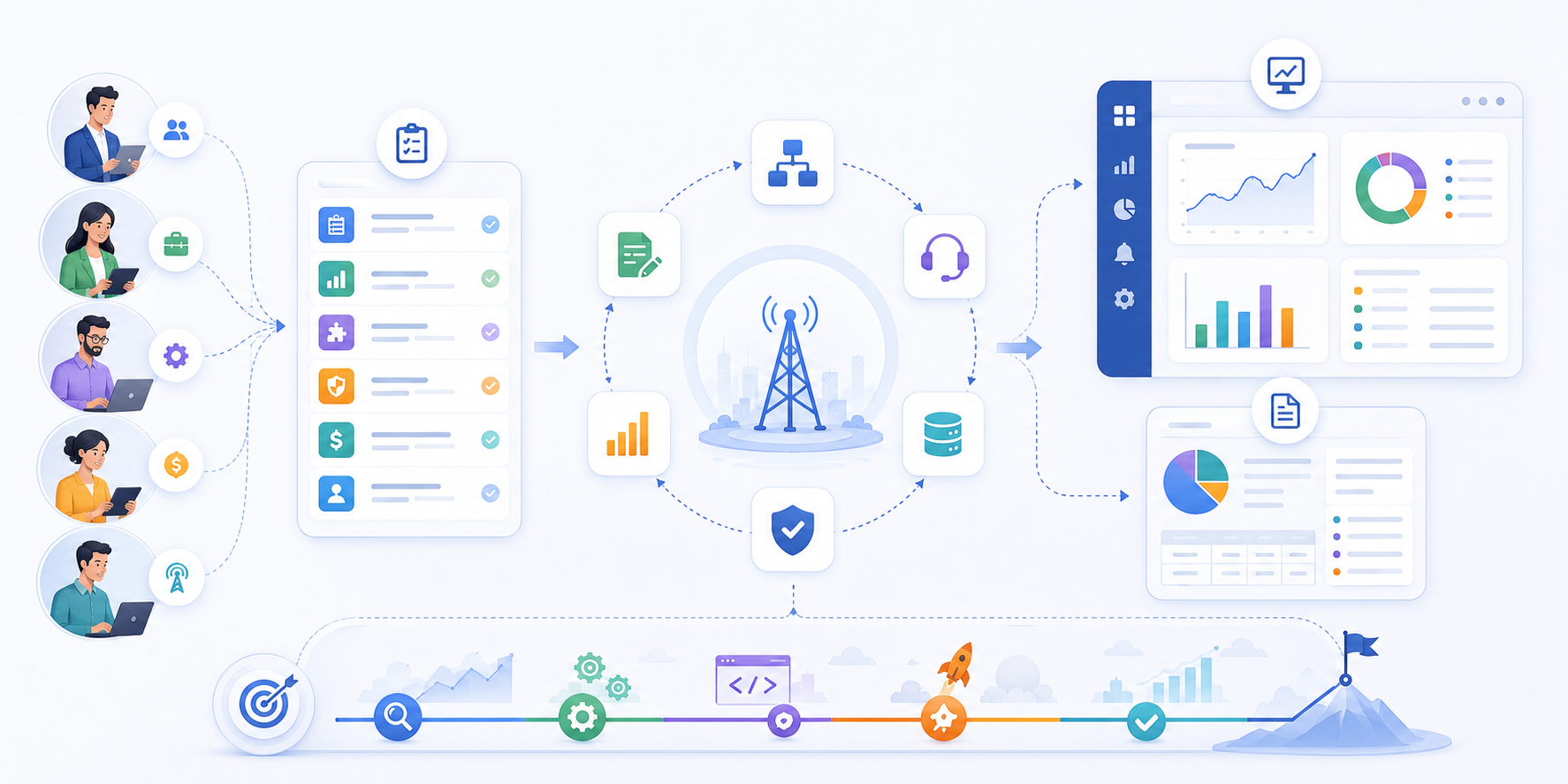
Enterprise telecom workflow ecosystem
Connecting stakeholder needs, business requirements, workflow modules, reporting dashboards, service operations, and roadmap planning into one enterprise SaaS product experience.
Enterprise design flow
The work taught me that enterprise SaaS design starts much before UI. It begins with understanding who needs what, why the business needs it, and how the workflow should support the product goal.
01Stakeholder needs
Understand what business, product, and operations stakeholders are trying to achieve.
02Business requirements
Translate business goals, rules, constraints, and reporting expectations into design inputs.
03Workflow design
Map how users move through tasks, decisions, data, and system states in the product.
04Roadmap thinking
Understand what should be designed first and how product improvements can be sequenced.
My role
At Verizon Enterprise Solutions, I worked on enterprise SaaS-based B2B applications for the telecom industry. My work focused on visual design, interface clarity, workflow understanding, and translating product requirements into scalable product screens.
Worked with stakeholder and business requirements to understand what the product needed to support.
Designed enterprise-grade screens for workflows, dashboards, reporting interfaces, and product operations.
Learned how product roadmap thinking influences what gets designed, sequenced, and improved over time.
Worked within brand and design standards while improving hierarchy, consistency, and usability.
What I learned
This project strengthened my understanding of enterprise SaaS product design and changed how I approached requirements and workflows later in my career.
Stakeholders
Understand the why
Stakeholder requirements are not just requests. They reveal business goals, operational constraints, and product priorities.
Business
Design for business logic
B2B products need design decisions that support business rules, customer needs, reporting, and operational efficiency.
Workflow
Map the system
Enterprise design requires understanding how tasks, roles, data, approvals, and exceptions move through the product.
Enterprise telecom workflows can be dense. The design needed to reduce confusion through clear hierarchy, predictable layout, and visible system states.
Translate business language into user actions
Stakeholder and business requirements had to become practical product actions, screen states, and interface decisions.
Design for repeat use
B2B enterprise users often return to the same workflows every day, so consistency, scanability, and task efficiency mattered more than decorative UI.
Think beyond one screen
The work helped me see product design as a connected system of workflows, requirements, components, and roadmap priorities.
Outcome
This experience built my foundation in B2B enterprise SaaS design. I learned how to understand stakeholder requirements, interpret business requirements, design enterprise workflows, and think about product roadmaps.
It also helped me mature from visual execution into product thinking. I began to see design as a way to connect business goals, user workflows, interface systems, and delivery priorities.
Key learnings
Stakeholder requirement understanding is the foundation of enterprise product design.
B2B workflows must support business logic, user roles, and operational realities.
Enterprise SaaS design needs consistency, hierarchy, and roadmap thinking.
Good product design connects business value with clear user workflows.