Designing and closely delivering a complete virtual-care workflow in three weeks during
COVID-19: patient appointment booking, clinic request handling, doctor video consultation,
digital prescriptions, medicine ordering, delivery, and continuous vitals monitoring.
Role: Product / UX DesignerDomain: HealthcarePlatforms: Patient app, doctor app, clinic web appUsers: Patients, doctors, hospital teamsTimeline: 3 weeksFocus: Tele consultation, RPM, prescriptions, medicine delivery
Problem
COVID-19 restricted physical hospital visits, but patients still needed consultation, prescriptions, medicine access, and continuous care. Hospitals needed a remote workflow that could support patients, clinics, and doctors without breaking existing care operations.
Outcome
In three weeks, we completed the design, development, and delivery of the full virtual consultation and RPM workflow. The solution helped hospitals continue care remotely and opened a digital service path for consultation, prescriptions, medicine orders, and monitoring.
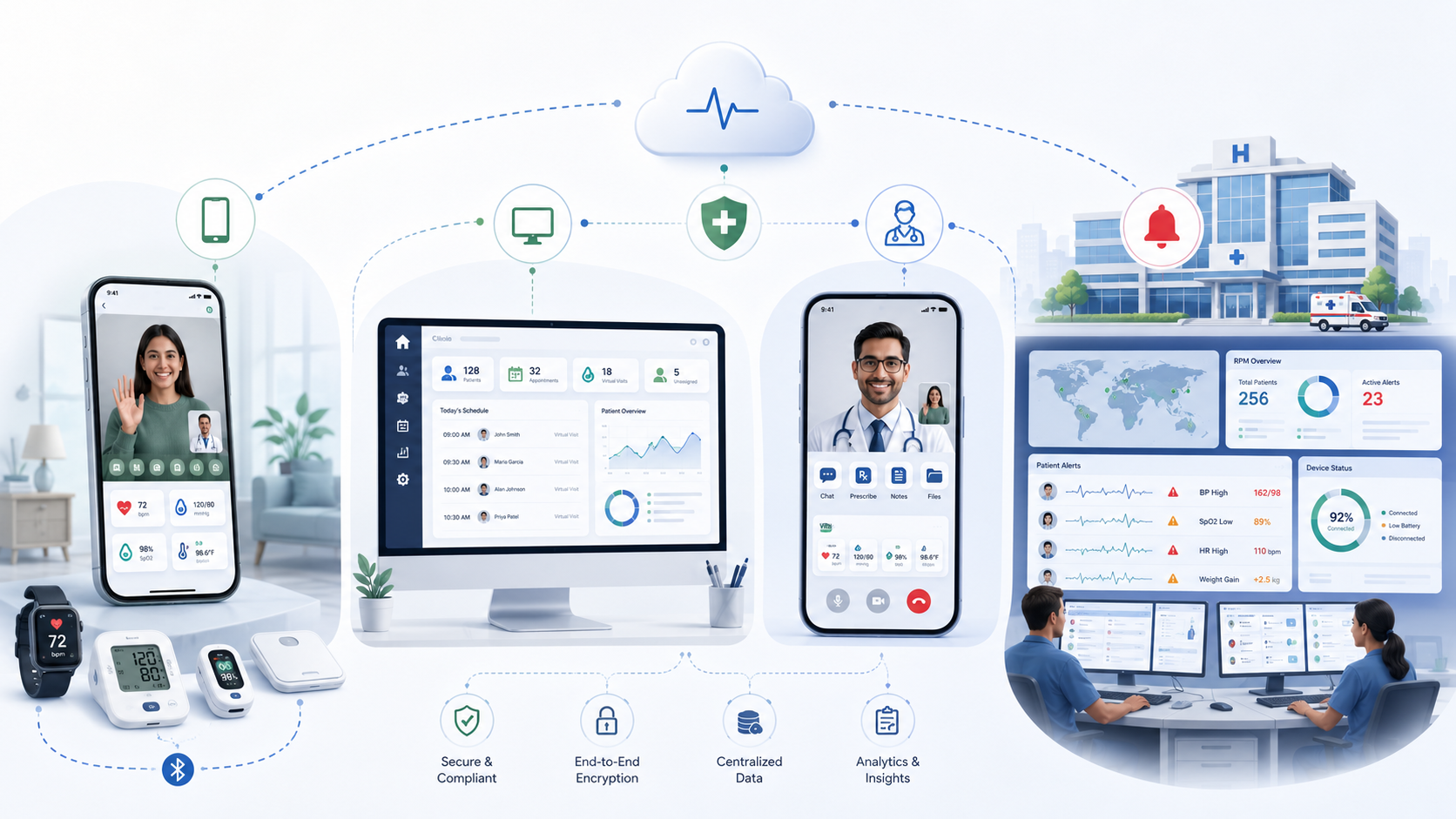
Virtual consultation ecosystem
Connecting the Patient App, Clinic Web App, Doctor App, digital prescriptions, medicine delivery, and RPM alerts into one coordinated care workflow.
End-to-end workflow
The experience had to work as one connected service, not as isolated screens. A patient request had to move smoothly from app to clinic to doctor, then return as prescription, order, delivery, and monitoring actions.
01Book appointment
Patient books a virtual consultation from the mobile app.
02Clinic receives request
The request appears in the clinic web app for review, assignment, and coordination.
03Doctor consults
The doctor receives the case in the mobile app and conducts video consultation inside the app.
04Prescription and delivery
The doctor creates a digital prescription. The patient can order medicines from the hospital for delivery.
My role and ownership
I took care of the overall design direction and closely supported delivery across the workflow. My work involved translating clinic requirements into clear journeys, screens, states, and development-ready actions while continuously aligning with stakeholders, product, and engineering.
Mapped patient, clinic, doctor, prescription, delivery, and RPM alerting journeys.
Designed the patient mobile app flow for booking, consultation, prescription access, and medicine ordering.
Designed clinic-side request handling for incoming appointments and operational coordination.
Designed doctor app flows for consultation, video call, digital prescription creation, and care follow-up.
Worked in short sprints with stakeholders and developers to keep design, development, and delivery moving together.
Process in three weeks
The timeline was short, so the process focused on fast requirement detailing, workflow clarity, sprint-level decisions, and close design-development communication.
Week 1
Understand and map
Detailed clinic requirements, mapped patient-to-clinic-to-doctor workflows, and clarified the key service handoffs.
Week 2
Design and align
Created core flows and screens for booking, request handling, video consultation, prescriptions, orders, and RPM alerts.
Week 3
Support build and delivery
Worked closely with engineering and stakeholders to resolve workflow details and deliver the complete experience.
Key product areas
The case study combines two urgent healthcare needs: virtual consultation for care access and RPM for continuous monitoring.
Patient app
Book and access care
Patients could request appointments, join video consultation, receive prescriptions, and place medicine orders.
Clinic web app
Manage requests
Clinics could receive consultation requests, coordinate appointments, and manage care operations from the web app.
Doctor mobile app
Consult and prescribe
Doctors could review the request, conduct video consultation, create digital prescriptions, and share them with patients.
RPM workflow
Monitor and alert
The system continuously captured patient vitals and notified clinics and doctors when abnormalities were detected.
Design decisions
Design the workflow before designing the screens
The biggest risk was not visual design, but fragmented service handoffs. I focused first on how appointment requests, clinic action, doctor consultation, prescription, order, delivery, and monitoring connected.
Keep patient actions simple
Patients were already under stress during COVID-19. The app needed direct flows, clear status, and obvious next steps from booking to consultation to medicine ordering.
Support clinical urgency through alerts
For RPM, abnormal vitals needed to reach the clinic and doctor quickly. Alerting became a critical part of the workflow, not a secondary notification feature.
Balance user experience with revenue impact
The project helped me see design as part of business performance. From this project onward, I started considering revenue impact along with user experience in the design decisions I make.
Outcome
We completed the design, development, and delivery of the whole workflow in three weeks. The solution gave hospitals a practical way to continue consultations, prescriptions, medicine fulfilment, and remote monitoring during a period when physical access to care was heavily restricted.
The project strengthened my communication and teamwork skills. I was continuously involved in matching stakeholder and clinic requirements with design decisions, development feasibility, and delivery priorities.
It also changed how I think about design impact. I learned to convert stakeholder requirements into actions that support both user experience and revenue opportunities for the hospital.
Key learnings
Strong communication keeps short timelines realistic.
Short sprints work when requirements are detailed and decisions are visible.
Healthcare design must consider the complete service workflow, not only the patient-facing app.
Good product design should improve user experience and support business value at the same time.